Coloring With Secret Light Sources: Make Pages Glow
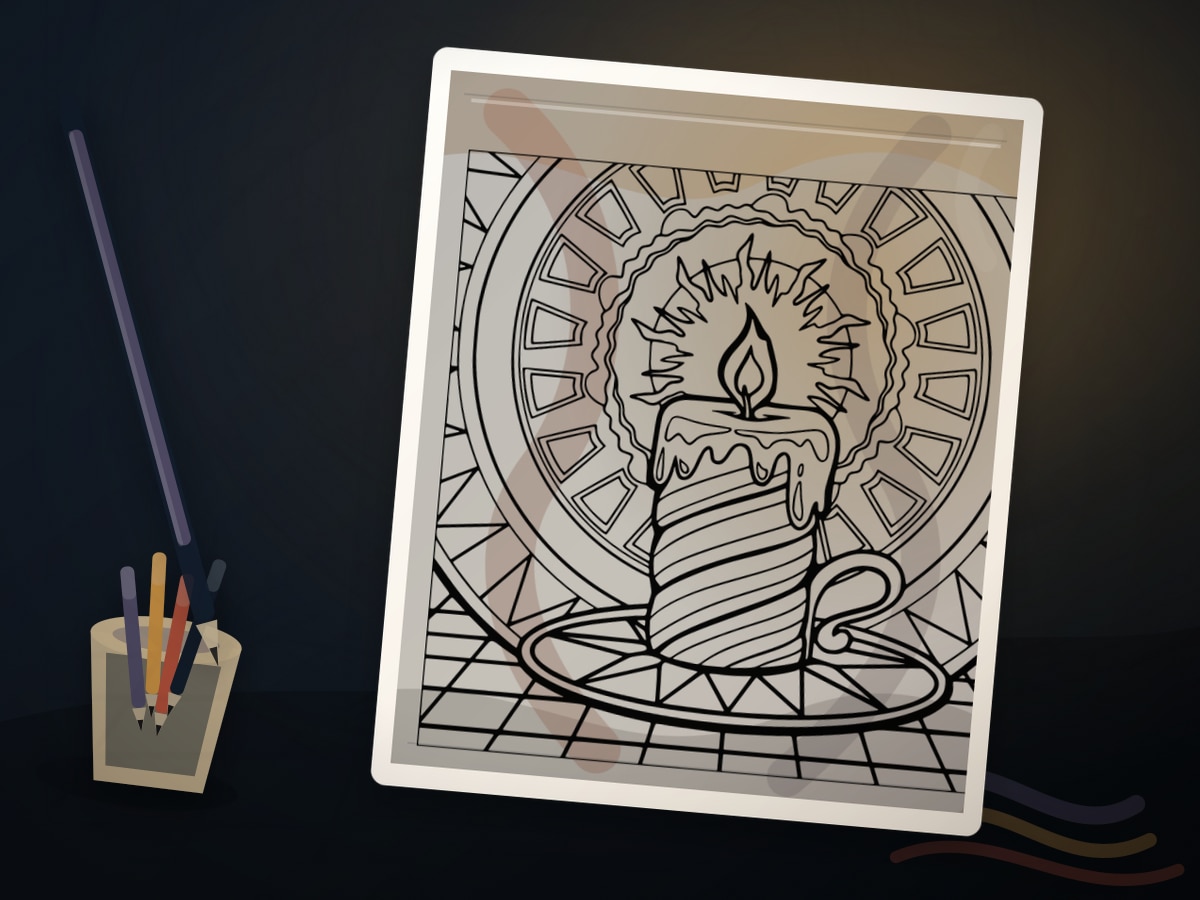
A secret light source is an invisible lamp, moon, candle, window, crystal, or magical object that explains every highlight and shadow on the page.
This technique helps flat coloring pages feel cinematic because light becomes the organizing idea.
What This Technique Builds
The practical skills to focus on are:
- one hidden light
- highlight path
- cast shadows
- glow color
- dark support
Coloring With Secret Light Sources becomes easier when the page has one clear purpose. Use a hidden glow planned before the shadows as the starting point, then choose candles, lanterns, moons, windows, magical objects, and cozy interiors so the subject and the technique help each other. That choice saves more time than any complicated palette.
Best Pages to Try
This approach works especially well with space coloring pages, faerie coloring pages, Halloween coloring pages, flower coloring pages. The page should make a hidden glow planned before the shadows visible without asking you to solve every coloring problem at once.
For a first attempt, choose medium detail with one clear focal area. That balance leaves room for a hidden glow planned before the shadows without burying the main idea in tiny spaces.
Page choice is part of the technique. Look for candles, lanterns, moons, windows, magical objects, and cozy interiors, then decide whether the main subject, border, or background deserves the first color decision.
A spare print is useful, but use it with a specific question about a hidden glow planned before the shadows. Testing one decision keeps the finished page from becoming overworked.
Palette and Materials
Suggested palette: #111827, #f59e0b, #fef3c7, #38bdf8, #fb7185.
Colored pencils are excellent for glow because they can fade gradually. Markers can make the base glow bright, then pencils can soften the edge.
Think of the palette as a set of roles for a hidden glow planned before the shadows: main color, support color, shadow color, rest color, and accent. If a color does not have a role, leave it out for this page.
Yellow, orange, violet, indigo, cream pencil, and dark paper tests are enough for a focused first version. Add specialty pens, pastels, or paint only after the main color structure is already working.
Step-by-Step Method
- Choose the light source before choosing the palette.
- Mark the closest surfaces as brightest.
- Tint nearby objects with the glow color.
- Darken areas that turn away from the light.
- Add final highlights only on surfaces facing the source.
Once the first choices are in place, keep repeating the logic around a hidden glow planned before the shadows. The page looks stronger when later areas echo the first decisions instead of starting a new plan in every corner.
How to Make Coloring With Secret Light Sources Look Finished
The clearest sign of a finished page is hierarchy. Decide what should be seen first, what should support it, and what can stay quiet. The glow touches nearby objects and fades as it moves outward.
Edges and transitions should support a hidden glow planned before the shadows. Crisp edges help small details and focal shapes, while softer transitions help backgrounds, shadows, petals, fur, water, and glow effects.
Before adding final accents, view the page from across the room or at thumbnail size. If the main idea still reads as a hidden glow planned before the shadows, the page needs fewer additions than you think.
Where Coloring With Secret Light Sources Works Best
On subject pages, begin with the feature that gives candles and lanterns its personality: the main bloom, face, animal eye, central motif, or largest shape.
On patterns and mandalas, repeat decisions by shape family so a hidden glow planned before the shadows stays deliberate. Matching forms should relate to each other, even when the value shifts from ring to ring or corner to corner.
Keep the supporting background quieter than candles and lanterns unless the background is the reason you printed the page.
Common Mistakes to Avoid
- Do not place highlights on surfaces facing away from the light.
- Do not make the glow color appear only once.
- Do not forget that shadows need direction too.
The main risk is treating every area as equally important. A strong page gives a hidden glow planned before the shadows a lead subject, supporting details, and quiet spaces that let the eye rest.
If the page changes direction halfway through, connect the new choice to a hidden glow planned before the shadows. Repetition makes the change look intentional.
Example Practice
Choose a moon, candle, or magic page. Make the object glow yellow, color nearby surfaces warm, and push the far background into cool blue or violet.
After the exercise, look for the one decision that made a hidden glow planned before the shadows clearer. Repeat that decision on the next page before adding a second new skill.
Troubleshooting Coloring With Secret Light Sources
If the page looks flat, check whether a hidden glow planned before the shadows is actually visible. Add contrast near the focal point, repeat the key color, or reduce a background that is pulling too much attention.
If a hidden glow planned before the shadows feels weak, make one decision stronger instead of adding five new ones. Deepen the focal contrast, repeat the accent, or simplify the background.
Darken the area around the glow instead of whitening the glow itself. That single correction usually does more than adding another layer everywhere.
Related Coloring Guides
Continue with Rembrandt light and shadow, how to shade, colored pencil layering.
Together, those guides help turn a hidden glow planned before the shadows from a single idea into a repeatable coloring habit.
Next Page to Print
Choose space coloring pages and decide the main color role before you start. A simple plan usually beats a large pile of tools when a hidden glow planned before the shadows is the goal.
Print a second copy only if you want to test a different palette or tool around candles and lanterns. Comparing two versions of the same design is one of the fastest ways to improve.
Quick FAQ
Can a beginner start with this approach?
Yes, if you start with pages with objects that can plausibly emit light. Keep the first version small, test the tool or palette, and let the page teach one skill at a time.
What should I print first?
Start with pages with objects that can plausibly emit light. It should have enough detail to show the technique, but not so much detail that every mark becomes a decision.
How do I know when to stop?
Stop when the glow touches nearby objects and fades as it moves outward. If another layer would make the focal point less clear, the page is already finished enough.
Final Thought
Coloring With Secret Light Sources becomes more satisfying when the page has a clear visual promise. Choose the right printable, repeat the strongest decisions, and let the subject tell you where the detail belongs.