Cubist Coloring With Bold Planes: Facets, Value, and Multiple Views
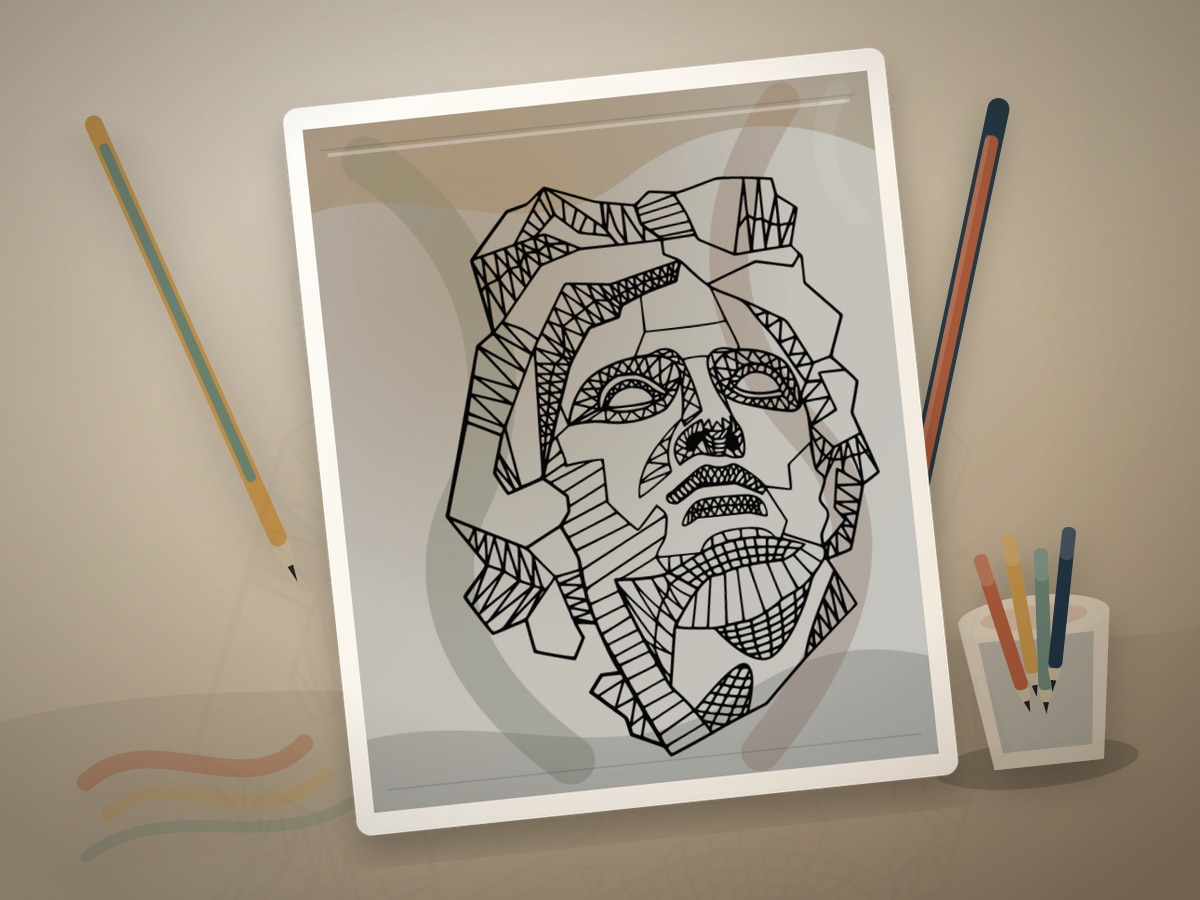
Cubist-inspired coloring is not random triangles. It is a way to break a subject into planes, values, and overlapping viewpoints. A face, guitar, vase, city street, or still life can become more interesting when you treat it as a structure rather than a smooth object.
Cubism developed in early twentieth-century modern art, especially through Pablo Picasso, Georges Braque, and later artists such as Juan Gris. Analytic Cubism often used muted browns and grays; Synthetic Cubism introduced brighter collage-like shapes and everyday materials.
What This Style Teaches
The useful traits to look for are:
- faceted planes
- multiple viewpoints
- muted value structure
- collage-like color blocks
- strong edges between shapes
Cubist Coloring With Bold Planes should feel like a visual translation, not a costume. Let faceted planes that show more than one angle at once guide the page, then use the artist reference as a boundary for value, rhythm, and restraint. The best results usually come from leaving some areas quieter than you first planned.
Best Pages to Try
This approach works especially well with art coloring pages, object coloring pages, face coloring pages, music coloring pages. The page should leave room for faceted planes that show more than one angle at once, even if the subject is not a literal museum scene.
For a first attempt, choose medium detail with one clear focal area. That balance leaves room for faceted planes that show more than one angle at once without burying the main idea in tiny spaces.
The strongest printable page is one where the line art already hints at faces, guitars, still lifes, masks, and angular abstracts. You do not need an exact art-history subject; you need a page with shapes that can carry the same light, contour, pattern, or movement.
A spare print is useful, but use it with a specific question about faceted planes that show more than one angle at once. Testing one decision keeps the finished page from becoming overworked.
Palette and Materials
Suggested palette: #5b4b3a, #9c7a52, #d8c5a3, #365d6b, #b95d3b.
Colored pencils and markers both work. Use markers for flat collage planes and pencils for value shifts. Keep a swatch strip beside the page to control the sequence.
Treat the palette as a limited studio set for faceted planes that show more than one angle at once. One color should carry the main mood, one should build structure, one should soften transitions, and one should be held back for the final accent.
Ochre, slate blue, brick, olive, and a darker pencil for plane edges will usually get you closer to the style than a large rainbow set. A smaller tool group keeps the page from drifting away from the reference mood.
Step-by-Step Method
- Identify the main object and divide it visually into planes: front, side, top, shadow, and reflection.
- Choose a limited palette so the fractured shapes do not become chaotic.
- Color adjacent planes with different values, not just different hues.
- Add one or two brighter Synthetic Cubist accents such as rust, teal, or ochre.
- Use pencil or fineliner to clarify the strongest structural edges at the end.
Pause after the first third of the page and compare it with the style goal. If the page has lost faceted planes that show more than one angle at once, adjust value and repetition before filling more spaces.
Finishing Judgment for Cubist Coloring With Bold Planes
The clearest sign of a finished page is hierarchy. Decide what should be seen first, what should support it, and what can stay quiet. Neighboring planes shift value so the image reads as built, not merely outlined.
Edges are part of the style decision when neighboring planes shift value so the image reads as built, not merely outlined. Keep the important contour or highlight crisp, then let secondary texture soften into the paper so the page has depth without becoming fussy.
Before adding final accents, view the page from across the room or at thumbnail size. If the main idea still reads as faceted planes that show more than one angle at once, the page needs fewer additions than you think.
Where Cubist Coloring With Bold Planes Works Best
On figure or portrait pages, apply the style first to the face, hands, hair, or clothing fold. That focal area should show the strongest version of faceted planes that show more than one angle at once.
On faces, guitars, still lifes, masks, and angular abstracts, translate the reference through palette and edge quality. A few disciplined details will say more than forcing every space to announce the source.
On dense patterns, simplify around faceted planes that show more than one angle at once. Choose two repeating motifs for the strongest color and let the remaining shapes act as rhythm, border, or rest.
Common Mistakes to Avoid
- Do not call any geometric pattern Cubist without a subject or viewpoint idea.
- Do not use every bright color in the box.
- Do not blend all plane edges smooth; some edges should stay crisp.
The biggest risk is over-explaining the reference. A page can feel inspired by a style with only a few disciplined choices around faceted planes that show more than one angle at once: palette, value, edge quality, and one repeated motif.
If a new color appears late, make it serve the plan for faceted planes that show more than one angle at once. Echo it in one small place or keep it so limited that it reads as a deliberate accent.
Example Practice
Choose a still life page. Assign five values from cream to dark brown, then add one teal or rust accent. Color each object as a set of planes rather than one blended surface.
After the exercise, look for the one decision that made faceted planes that show more than one angle at once clearer. Repeat that decision on the next page before adding a second new skill.
Troubleshooting Cubist Coloring With Bold Planes
If the page looks flat, check whether faceted planes that show more than one angle at once is actually visible. Add contrast near the focal point, repeat the key color, or reduce a background that is pulling too much attention.
If faceted planes that show more than one angle at once feels weak, make one decision stronger instead of adding five new ones. Deepen the focal contrast, repeat the accent, or simplify the background.
Simplify the palette before adding another fractured shape. That single correction usually does more than adding another layer everywhere.
Related Coloring Guides
Continue with Cezanne still life lessons, choosing colors, shading coloring pages.
Read those next if you want faceted planes that show more than one angle at once to connect with broader skills such as light planning, color restraint, texture, or controlled accents.
Next Page to Print
Choose art coloring pages with one visible place for faceted planes that show more than one angle at once. Limit the first version to the palette and tool group above so the style remains clear.
For the second version, change only one variable that affects faceted planes that show more than one angle at once: a darker background, a softer edge, a different accent, or a new subject. That comparison teaches more than jumping to a completely unrelated page.
Quick FAQ
Do I need to copy the original artist exactly?
No. Use the artist or movement as a source of decisions, not as an imitation test. A limited palette, a clear value plan, and one signature visual idea around faceted planes that show more than one angle at once are enough.
What should I print first?
Start with faces or still lifes with large angular spaces. It should have enough detail to show the technique, but not so much detail that every mark becomes a decision.
How do I know when to stop?
Stop when neighboring planes shift value so the image reads as built, not merely outlined. If another layer would make the focal point less clear, the page is already finished enough.
Further Reading
Final Thought
Cubist Coloring With Bold Planes gives a printable page an art-historical point of view without turning coloring into a copy exercise. Let faceted planes that show more than one angle at once guide the strongest choices, keep the palette disciplined, and leave enough quiet space for the style to breathe.